
The Talent Manager’s Secret Weapon: Using Decision Architecture to Scale Leadership
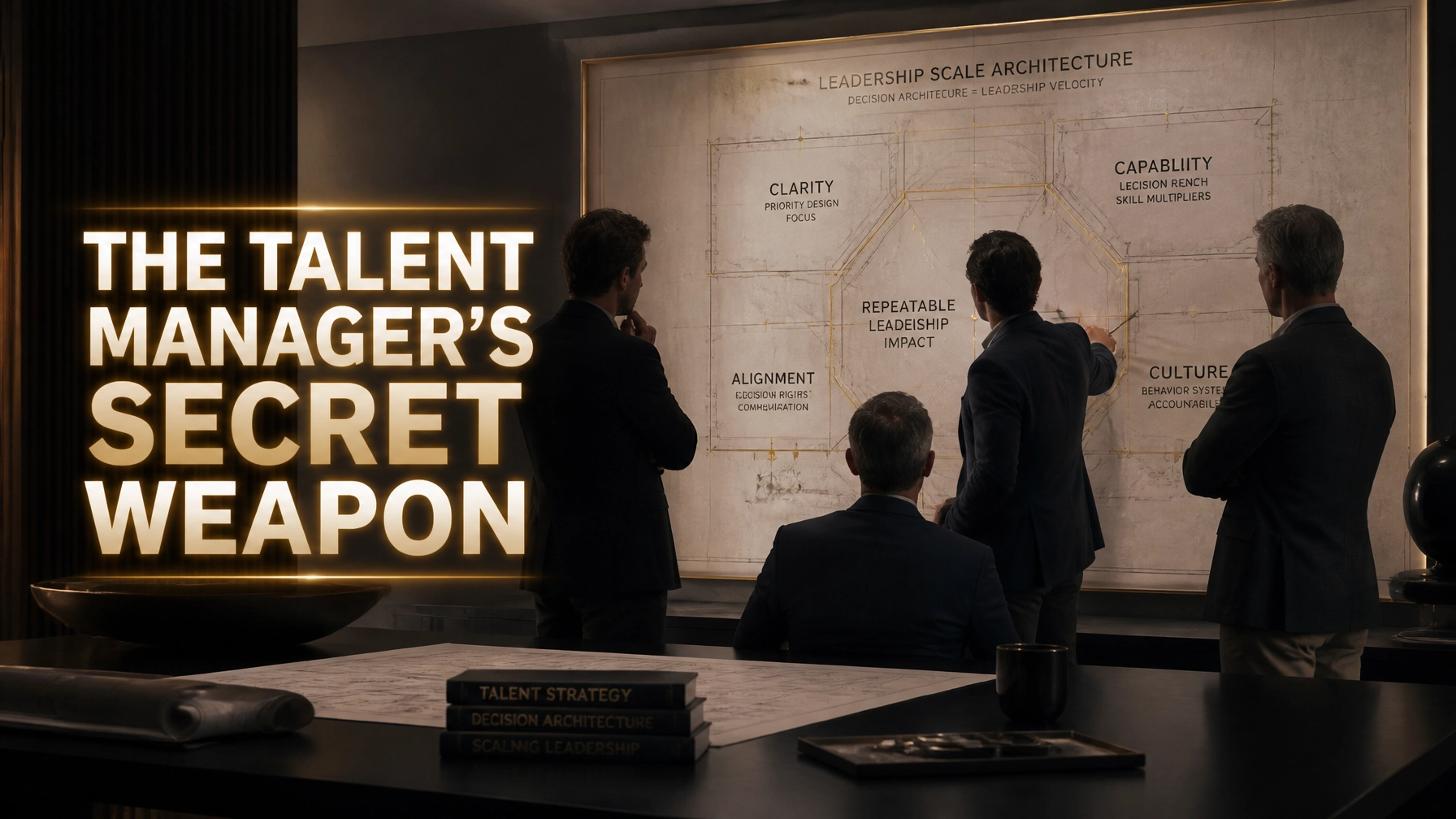
Most talent programs are expensive theater.
HR Directors and Talent Managers spend months designing high-potential programs, selecting expensive assessment tools, and orchestrating complex 9-box reviews. The goal is always the same: scale leadership. Yet, despite the effort, the organization remains stuck in a cycle of "heroic" leadership. When a key executive leaves, the system breaks. When the CEO is busy, decisions stall.
The problem isn't your talent. It’s your architecture.
If you are treating leadership as a personality trait to be "developed" rather than an infrastructure to be "installed," you are the bottleneck. To scale a company from $10M to $100M and beyond, you don't need better programs. You need Decision Architecture.
The Diagnosis: Why Traditional Talent Management Fails
Traditional HR functions start with solutions. They buy a new Learning Management System (LMS) or hire a consultant to run a weekend retreat. This is decorative, not structural.
In a high-growth environment, the primary friction point isn't a lack of "leadership skills." It is Decision Drag. This happens when the logic used to make critical people decisions: hiring, promotions, and succession: is undocumented, inconsistent, and trapped in the heads of a few senior leaders.
When leadership logic is undocumented:
- Promotion becomes a popularity contest. The "loudest" performers get moved up, while the "architects" are ignored.
- Succession planning is a myth. You have names on a slide, but no one actually ready to step into the cockpit.
- Burnout becomes the default. High-performers quit because they are tired of navigating the "Power Map" instead of doing their jobs.

Requirement 1: Define the "Theory of the Case"
You cannot architect a system if you don’t know what you are building. Most organizations have a "competency model" that is 40 pages of fluff. It’s useless.
A Decision Architect starts by building a Theory of the Case for leadership. This is a brutal, declarative standard of what "good" looks like in your specific context.
Stop asking what a "leader" is. Start asking:
- What specific outcomes must this role consistently deliver over the next 24 months?
- What behaviors are true of our most effective (not most visible) performers?
- What specific "derailers": ego, risk-aversion, lack of operational cadence: consistently sink people in our culture?
This is your practical leadership standard. If you cannot explain this standard to a business leader in under five minutes, you aren’t an authority. You’re a technician.
Requirement 2: Stop Managing Programs, Start Designing Decisions
The real "secret weapon" of a world-class Talent Manager is the ability to design how decisions get made. You must move from being a "support function" to being the Owner of the Bar.
This requires installing a protocol for every critical people decision. At CXO Operating System™, we look at this through the lens of institutional infrastructure. You are building an Operating System for your people.

The Solution: Installing the Decision Architecture
To scale leadership, you must institutionalize the "Human Algorithm." This is the process by which raw talent is identified, vetted, and moved through the organization.
1. Decision Ownership (The D/C/I Model)
Ambiguity is the enemy of scale. For every promotion or high-level hire, the architecture must be explicit:
- The Decider (D): The final accountability holder. Usually the Business Unit Leader.
- The Consultant (C): The HR/Talent Leader. Your job isn't to "help." Your job is to certify that the leadership profile and risk factors have been considered. If you don't sign off, the decision doesn't happen.
- The Informed (I): Those who need to know the result but have no vote.
2. Non-Negotiable Inputs
Architecture requires standardized materials. You wouldn't build a skyscraper with "vibes," and you shouldn't build a C-suite with them either. Every decision must have:
- Performance Evidence: Hard data, not one manager's opinion.
- Potential Signals: Specific evidence of learning agility and complexity handling.
- Risk Data: Documented derailers and "Never Again" lessons from past failures.
3. Guardrails and Red Lines
Decision architecture includes built-in "circuit breakers." These are the rules that prevent the system from failing.
- The Mobility Rule: No one is tagged as "High Potential" without documented evidence of aspiration and mobility.
- The Internal Slate Rule: No external Director-level hire is approved without exploring at least one internal candidate.
- The "High Derailer" Trigger: Any candidate with high performance but high risk (e.g., cultural toxicity) triggers an automatic additional review.
Scaling the Human Algorithm: Beyond the Heroics
Once the architecture is in place, your role shifts. You are no longer the person who "does" HR. You are the person who ensures the CEO Operating System™ is functioning correctly.
This means training your managers to think like architects.
Most managers are "reactive." They hire because they are desperate. They promote because they are afraid of losing someone. As a Talent Manager, you must upgrade their "mental software." Run "Decision Labs" where you take real cases and deconstruct them. Ask: What evidence did you use? What did you ignore? Where did your personal bias create a blind spot?
You are building Decision Competence, not compliance.

The Payoff: Leadership at Scale
When you install Decision Architecture, the organization changes:
- You Stop Being the Bottleneck. Managers become capable of making high-quality talent calls without you holding their hands. The system handles the "noise," leaving you to focus on high-level strategy.
- Leadership Quality Becomes Predictable. It no longer depends on who a person's direct boss is. The "Human Algorithm" ensures a consistent standard across the company.
- You Earn a Seat at the Table. When you can show: quantitatively: how your architecture is reducing turnover, accelerating promotion readiness, and aligning with the Strategic Foundation (OPSP), you are no longer a "cost center." You are a value creator.
Close the Loop: Measuring Architecture, Not Activity
Stop tracking training hours. Stop tracking engagement scores as a primary KPI. They are lagging indicators at best, and vanity metrics at worst.
If you want to measure the health of your leadership infrastructure, track these:
- Quality of Hire (Leaders): Performance and retention at the 18-month mark.
- Promotion Success Rate: How many promoted leaders are hitting their targets two years later?
- Succession Hit Rate: How often is an internal successor chosen and successful?
- Decision Latency: How long does it take to fill a critical gap once it's identified?

The Path Forward
The shift from Talent Technician to Decision Architect is not easy. It requires moving away from the "warm and fuzzy" aspects of HR and leaning into the cold, hard logic of systems engineering.
It requires telling a CEO that their "gut feeling" is a systemic risk. It requires documenting the invisible logic that governs the company and turning it into a repeatable infrastructure.
But this is the only way to scale. Heroics don't scale. Systems do.
If you are ready to stop managing programs and start building a world-class leadership architecture, it’s time to install an Operating System.
The CXO Operating System™ provides the frameworks, decision architecture, and infrastructure CEOs and HR leaders need to scale without breaking. Explore the System.